HMG01 / 21

Homage

Concept
Neighborhood Woodfire
Document
Investment Overview
Status
Seeking lead investor
HMG02 / 21
The Premise

A small restaurant. Tight menu. Shared systems. Consistent execution.

The goal is not to build something large or overly ambitious — but something that works well every day and holds up over time.

Designed for 32–36 seats, operating across two service periods that run out of the same kitchen — same ingredients, same prep, same fire.
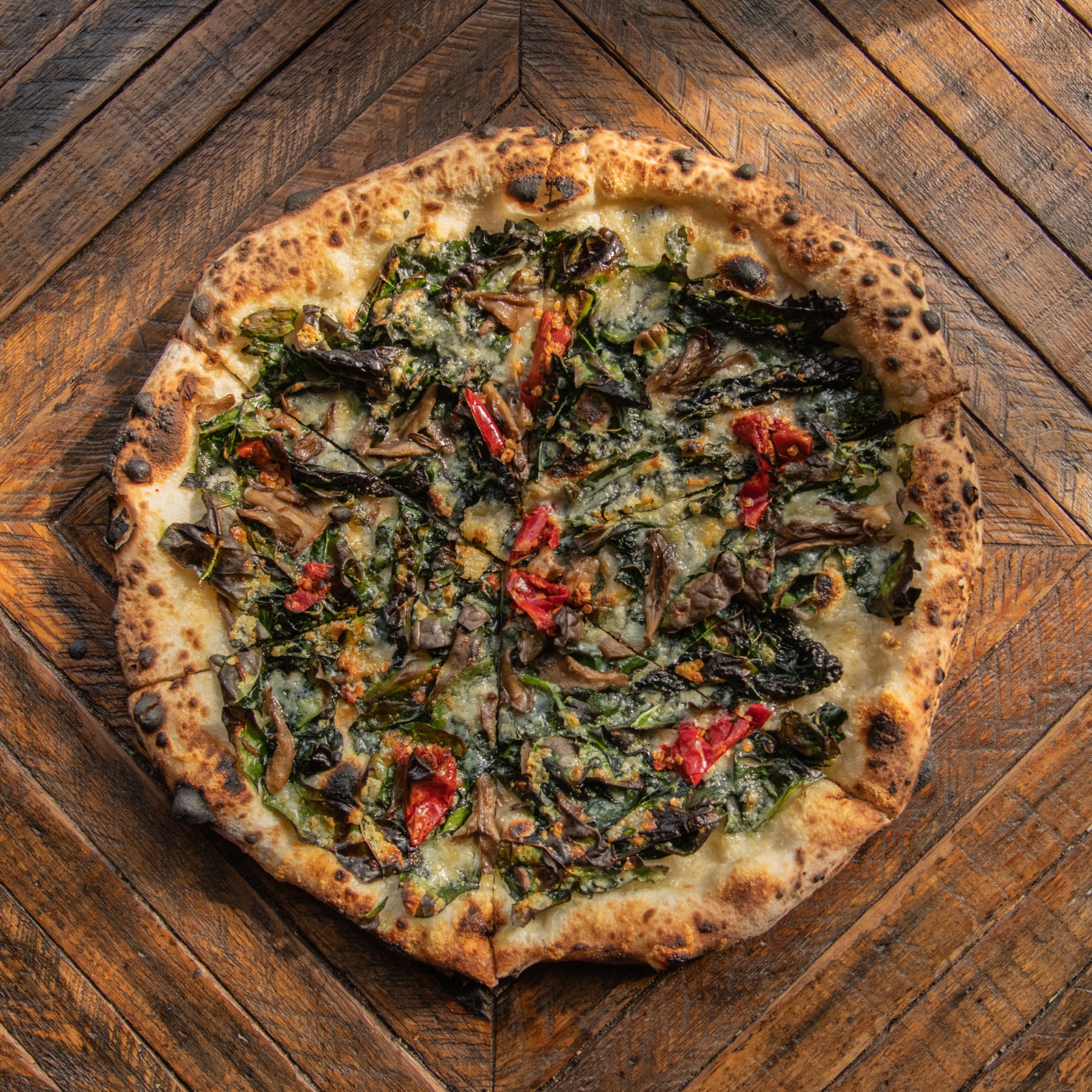
Wood-fired pizza with greens and roasted tomatoes
HMG03 / 21
01.Service Model

Two services. One kitchen.

Daytime

Fast-casual.

Counter-service sandwiches, pizza, salads, sides. Volume-driven but simplified — a 3-hour service window with steady, manageable throughput.

Evening

Full service.

Dinner built around pizza and hearth cooking. ~1.5–3 turns per night, served to a full dining room with bar rail and counter seating.

Both services run out of the same kitchen, using the same ingredients and prep — which keeps the operation focused and efficient.

HMG04 / 21
02.Concept Summary

A simple system. Repeated at a high level.

Homage is a woodfire restaurant built around a simple system: pizza as the backbone, with the hearth supporting everything else.

The kitchen runs off one primary heat source — allowing for a focused menu and consistent execution.

The goal is not to do a lot, but to do a few things well and repeat them at a high level.
HMG05 / 21
Ethos

Homage is our way of naming the people and places that shaped how we cook and how we think about hospitality.

That includes farm kitchens, rural restaurant work in Michigan, and Indigenous food traditions that existed long before either. These influences show up in how the restaurant operates — cooking over fire, preserving what we can, and using ingredients fully.

Not a recreation. Not a presentation of heritage. A working expression of where we come from — built into a restaurant that feels grounded, consistent, and worth returning to.

HMG06 / 21
03.Differentiation

What sets Homage apart is discipline.

The kitchen is built around one system. The menu stays tight. Ingredients carry across multiple dishes.

No attempt to cover every category — just a focus on being reliable, efficient, and good night after night.

  • Fire-based identity
  • Tight menu
  • Shared systems
  • Controlled labor

Not novelty. Not scale.

HMG07 / 21
04.Core Idea — The Culinary System

Pizza as the backbone. Fire as the system. One workflow.

Culinary System

Woodfire-first.

A cooking model that integrates pizza and hearth dishes into one workflow. The oven and hearth operate as a single system — supporting all hot food production and keeping the kitchen compact.

Menu Strategy

Tight, rotated.

A focused menu that rotates seasonally within a fixed structure. Ingredients are shared across pizzas, hearth dishes, and lunch items to reduce waste, simplify prep, and maintain consistency.

Operational Intent

Built to repeat.

  • Dinner targets ~1.5–3 turns per night
  • Lunch is volume-driven but simplified
  • Built around consistency, not speed alone
HMG08 / 21
05.Neighborhood Positioning

A neighborhood restaurant — first.

Designed for repeat visits, weeknight dinners, casual lunches, and regular use — rather than relying on peak demand or tourism.

Revenue spreads across lunch and dinner to stabilize performance throughout the week.

The goal is consistency over spikes.

Competitive Position

Differentiation comes from execution and structure — not novelty or scale.

  • Fire-based identity  — a single primary heat source
  • Tight menu  — rotated seasonally within a fixed structure
  • Shared systems  — ingredients cross-utilized day and night
  • Controlled labor  — cross-trained, flexible roles
HMG09 / 21
06.Space & Layout
Size
1,600–2,000 sq ft
Seating
32–36 seats
Layout Concept
  • Woodfire oven as central anchor
  • Hearth line adjacent to oven
  • Compact expo connecting BOH and FOH
  • Bar rail / counter seating
  • Dining room built for flow, not density
Design Priority

Fire visibility    efficient service    controlled movement.

HMG10 / 21
07.Kitchen Design — BOH
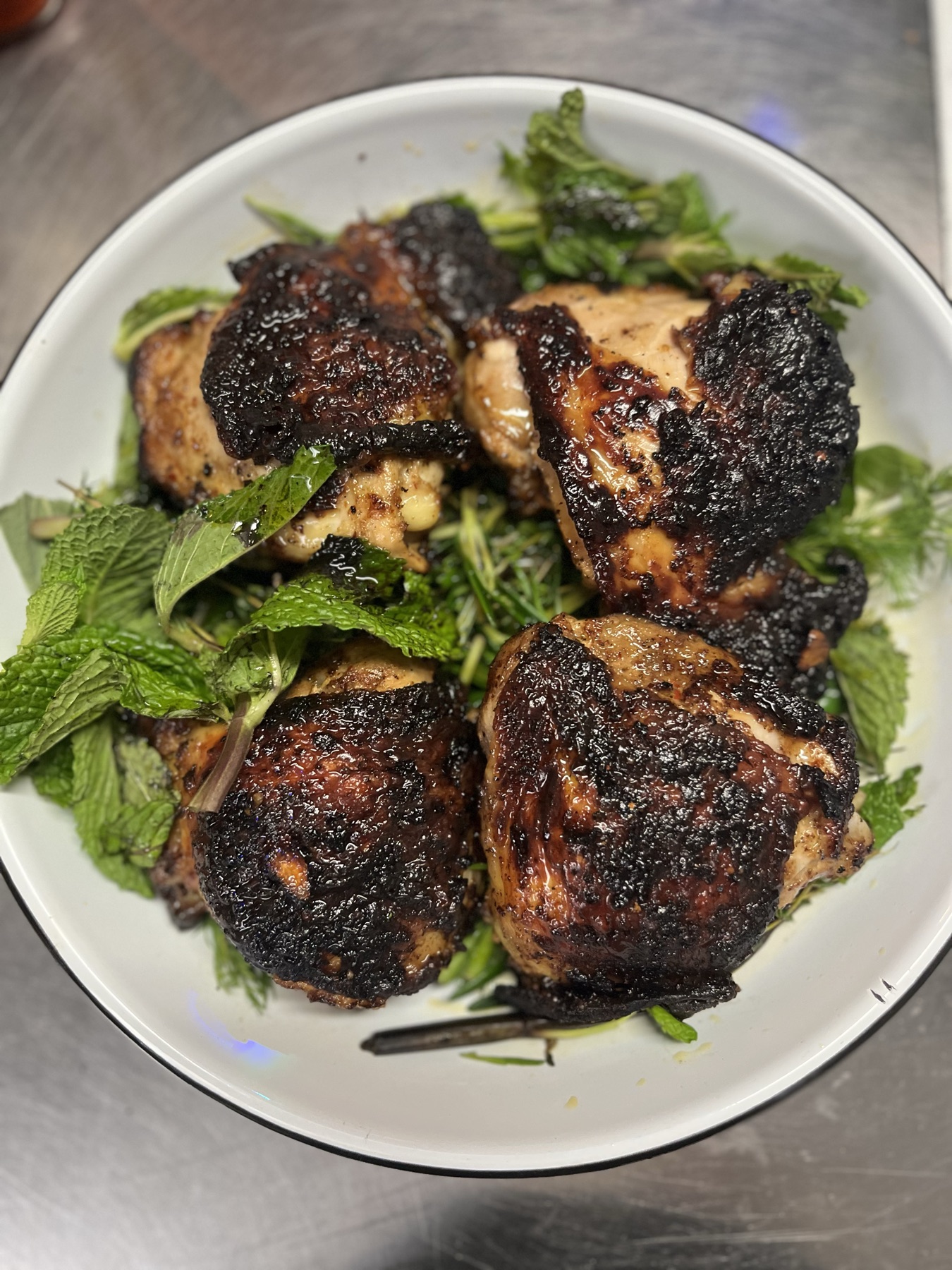
Charred hearth dish with fresh herbs

Tight, functional. Less equipment, fewer stations.

Core Equipment
  • Woodfire oven  — primary system
  • Hearth / plancha station
  • Undercounter refrigeration  — lowboys
  • Reach-in refrigerators and freezers
  • Compact dish system

A system that relies on repetition instead of complexity.

HMG11 / 21
08.Menu Architecture — Dinner

A core structure that rotates within a fixed shape.

Pizza is the backbone; hearth dishes round out the table. The structure stays constant — what changes is what's in season.

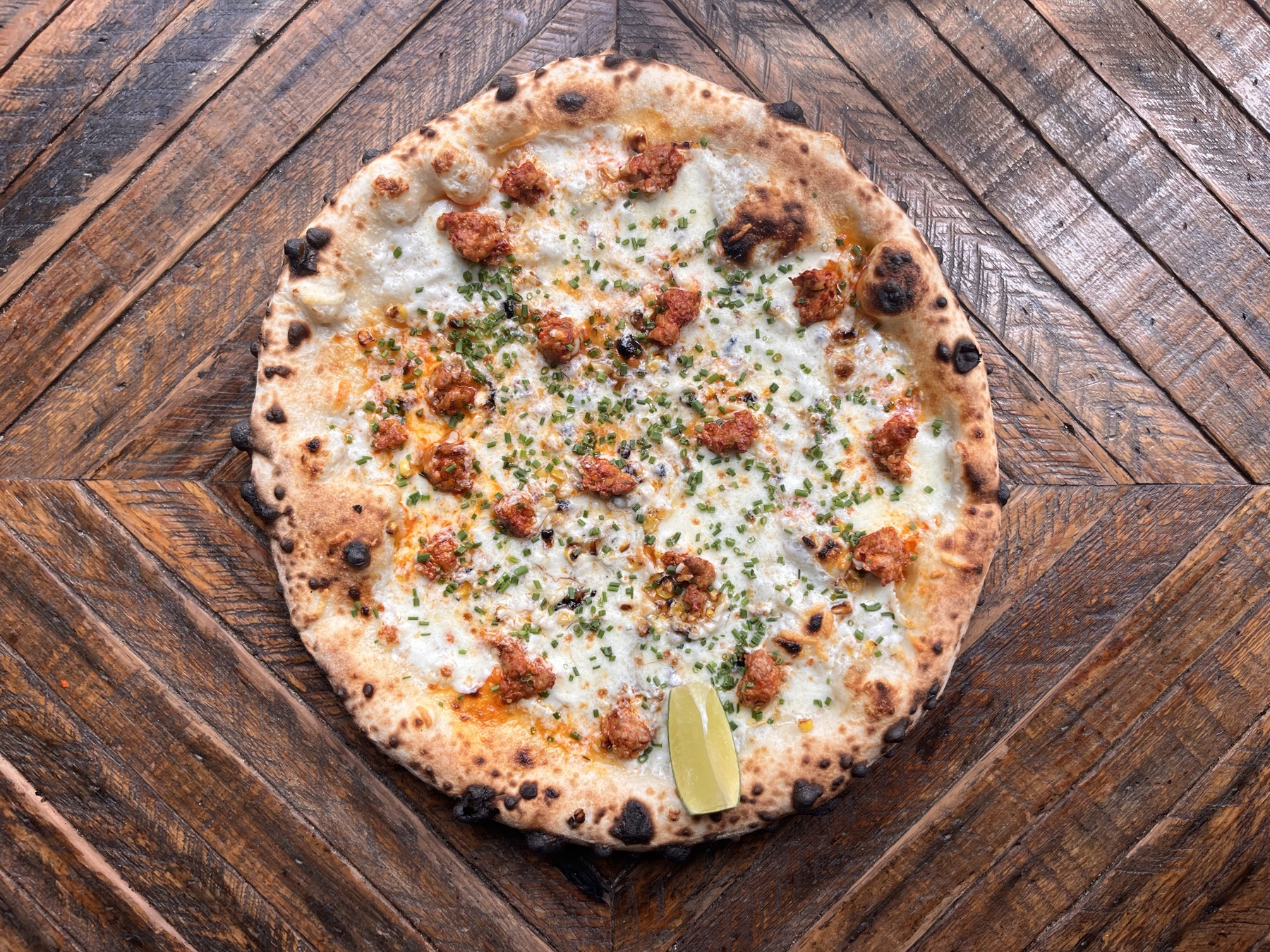
Wood-fired pizza with crumbled meat
HMG12 / 21
09.Menu Architecture — Daytime

Fast-casual. Same kitchen, same prep.

The menu is built from the same ingredients and prep as dinner — counter service, simple, dialed in.

Direction
  • Heritage ham, cherry preserves, herb mayo
  • Mortadella, pickled peppers, mustard
  • Focaccia-based rotating sandwich
  • Vegetable-forward builds using preserved elements

Familiar, but slightly off-center.

HMG13 / 21
10.Ingredient Strategy & Economics
Ingredient Strategy
  • High overlap across all menu categories
  • Shared dough, sauces, preserved items, roasted components
  • Whole-use philosophy to minimize waste
  • Seasonal shifts without structural change
Target Food Cost
~30%

Efficiency comes from fewer SKUs, shared prep, and cross-utilization between lunch and dinner.

HMG14 / 21
11.Beverage Program

Supports the food. Doesn't compete with it.

Small, controlled inventory. Seasonal alignment. Built for speed and consistency.

WineRotating natural list
Cocktails3–4 · tight, repeatable
BeerLimited local bottles
HMG15 / 21
12.Staffing & Hours
Dinner Service
  • Chef / Operator
  • Sous Chef
  • 3–4 Line Cooks
  • 3 FOH
  • 1 Bartender  — FOH support
Daytime Service
  • 2 cooks
  • 1 FOH counter  — staggered

Cross-trained team, flexible roles.

Hours of Operation
Wed – Sun

Closed Mon–Tue

Lunch11am – 2pm
Dinner5pm – 10pm
HMG16 / 21
13.Financial Model — Revenue
Dinner Assumptions
Seats32–36
Weekdays (Wed–Thu)~1.2–1.5 turns
Weekends (Fri–Sun)~1.6–1.9 turns
Blended average~1.4–1.7 turns
Avg. check$60–$70
Projected dinner revenue$650K–$850K
Daytime Assumptions
Service window3 hours
Covers / day (in-house)25–35
Avg. ticket$18–$24
Projected daytime revenue$160K–$220K
Total Revenue
Year 1
$800K–$1.05M
Stabilized
$1.0M–$1.3M
HMG17 / 21
14.Cost Structure & Margins
Operating Costs (% of Revenue)
Food
~30%
Labor
30–33%
Occupancy
8–12%
Other
5–7%
Target Margin (post-stabilization)
12–18%

Year 1 margins expected to be tighter during ramp.

HMG18 / 21
15.Capital Requirement
Total Project Cost
$340K–$395K
Use of Funds
  • Buildout & construction
  • Woodfire system + ventilation
  • Kitchen equipment + refrigeration
  • Furniture, fixtures, lighting
  • Permits, licensing, legal
  • Pre-opening + working capital
Capital Stack
Equity availableUp to 40%
DebtSBA / commercial
DevelopmentFounder-led
Currently

Seeking a lead investor.

HMG19 / 21
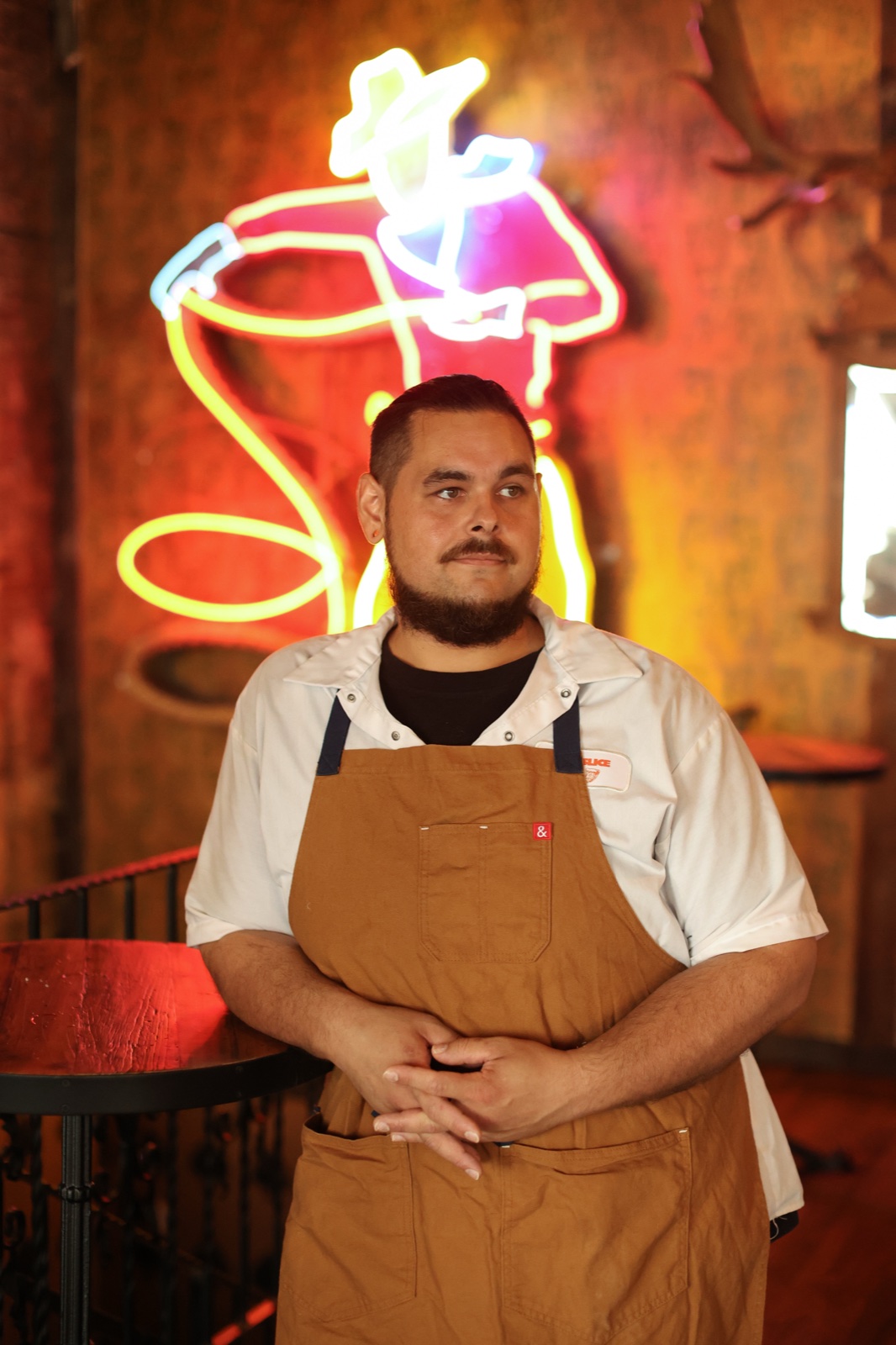
Joe — Founder & Chef of Homage
Operator

Joe

Founder · Chef

Behind Homage is a team with real operational experience — built on discipline, repetition, and a clear understanding of how kitchens function day to day.

HMG20 / 21
16.Development Timeline
Q2 2026
Pre-Development
Secure funding, finalize lease, begin design and permitting.
Q2–Q3 2026
Design & Permitting
Finalize drawings, approvals, equipment orders.
Q3 26 – Q1 27
Construction
Buildout, installation, inspections.
Q1–Q2 2027
Hiring & Training
Staff onboarding, systems setup, trial service.
Summer 2027
Opening
Full launch and operational ramp.
2027–2028
Stabilization
Revenue stabilization, cost optimization, system refinement.
Build-out Strategy

Prioritize kitchen + fire systems. Avoid unnecessary aesthetic spend. Warm, restrained, functional space — fire as the central element.

Control System

Limited menu → consistency. Ingredient overlap → reduced waste. Repetition → speed + quality. Structure → margin protection.

HMG21 / 21
Vision
Designed to operate well, not just open well.

Homage is small, fire-driven, and built to last. Not rapid expansion — a neighborhood restaurant people return to regularly. Consistent, grounded, reliable.

Behind it: a team with real operational experience, built on discipline and repetition. Not a concept — a working restaurant built to execute.

Growth comes from refinement, not expansion of complexity.